Technological advances
The landscape of UK manufacturing is undergoing a profound transformation. From the shop floors of Birmingham foundries to the vast distribution centres of the Midlands, technological advances are reshaping how businesses operate, compete, and protect their workforce. Yet for many operations managers and business owners, the sheer pace of innovation can feel overwhelming.
This resource provides a comprehensive overview of the key technologies driving change across British industry. Whether you are considering retrofitting sensors to ageing machinery, exploring collaborative robots for repetitive tasks, or weighing up investments in automated storage, you will find practical insights to inform your decisions. Each section introduces fundamental concepts and highlights the critical considerations that separate successful implementations from costly failures.
Think of this as your map to the technological landscape—not a detailed street guide, but a clear orientation that helps you understand where different solutions fit and which paths deserve closer exploration for your specific operation.
Smart Automation Retrofitting: Upgrading Legacy Equipment
Many UK manufacturers operate machinery dating from the 1980s and 1990s—equipment that remains mechanically sound but lacks the connectivity modern operations demand. Retrofitting offers a pragmatic middle ground between expensive replacement and accepting suboptimal performance.
Adding Visibility to ‘Blind’ Machinery
The core principle involves adding sensors and connectivity to equipment that was never designed for data collection. Vibration sensors, temperature monitors, and current transformers can be installed on rotating assets without lengthy shutdowns. The goal is transforming machines from opaque black boxes into transparent, data-generating assets.
Edge Computing Versus Cloud Processing
Once data flows, a critical decision emerges: process locally at the edge or transmit to the cloud. For UK manufacturers with inconsistent internet connectivity—a reality in many industrial estates—edge computing provides resilience. Real-time decisions happen on-site whilst historical analysis can sync to cloud platforms when bandwidth allows.
Cybersecurity Considerations
Connecting previously isolated programmable logic controllers (PLCs) introduces security vulnerabilities. Retrofitted systems often lack built-in protection, creating potential entry points for malicious actors. A defence-in-depth approach, including network segmentation and regular firmware updates, becomes essential rather than optional.
Human-Machine Interfaces: Why UX Reduces Operator Error
The interface between workers and machinery represents a critical but often overlooked point of failure. Research consistently shows that poorly designed dashboards contribute significantly to what gets labelled as ‘human error’—though the fault frequently lies with the design rather than the operator.
Information Architecture and Cognitive Load
When operators face screens cluttered with hundreds of data points, critical alerts become lost in visual noise. Effective HMI design limits displayed information to genuinely actionable items, presenting context-appropriate data rather than everything simultaneously. The principle mirrors car dashboard design: essential information visible at a glance, secondary data accessible when needed.
Physical Input Considerations
The choice between touchscreens and physical buttons involves more than preference. In environments where operators wear heavy gloves—common in metalworking and cold storage—capacitive touchscreens become frustrating or impossible to use. Resistive screens or traditional buttons may prove more practical despite appearing less modern.
- Touchscreens suit clean environments with bare-handed operation
- Physical buttons work reliably with gloved hands and in dusty conditions
- Hybrid approaches combine both based on function criticality
Operating Technology in Extreme Environments
Standard industrial electronics carry temperature ratings that suggest suitability for factory environments. However, the difference between rated specifications and real-world performance often catches manufacturers by surprise—particularly in foundries, forges, and facilities with significant temperature variations.
Heat Management Strategies
Control cabinets near heat sources regularly exceed 40°C, causing standard PLCs to throttle performance or fail prematurely. Solutions range from simple cabinet cooling using vortex tubes to relocating sensitive electronics away from thermal zones. The investment in proper environmental control typically returns quickly through improved equipment lifespan.
Condensation Risks
Moving equipment from cold storage areas to warmer production floors creates condensation that damages electronics instantly. Understanding these transition risks and implementing appropriate acclimatisation procedures prevents expensive failures that no warranty covers.
Connected Workers and Smart Personal Protective Equipment
Technology increasingly extends beyond machinery to workers themselves. Smart PPE—helmets with sensors, connected gas detectors, and wearable location trackers—offers significant safety improvements, particularly for lone workers in hazardous environments.
Location Tracking Technologies
Inside steel-framed buildings where GPS signals cannot penetrate, alternative technologies become necessary:
- Active RFID provides reliable positioning using fixed readers throughout facilities
- Bluetooth beacons offer lower-cost alternatives for zone-based tracking
- Ultra-wideband systems deliver precise positioning for safety-critical applications
Geofencing Applications
Combining location awareness with automation enables safety interventions impossible with traditional approaches. Forklifts can automatically slow or stop when entering pedestrian zones. Workers approaching hazardous equipment without proper authorisation trigger warnings before incidents occur.
Data Protection Obligations
Collecting worker location and health data introduces significant GDPR obligations. Consent mechanisms, data minimisation principles, and clear retention policies require careful implementation. The legal complexities often surprise organisations focused primarily on safety benefits.
Automated Fume Extraction and Air Quality Control
Recent reclassification of mild steel welding fumes as definitive carcinogens has transformed regulatory requirements. Standard general ventilation no longer satisfies Local Exhaust Ventilation (LEV) testing requirements, compelling many workshops to upgrade extraction systems.
Effective fume capture requires positioning extraction points close to the source—typically within 150mm of the welding arc. On-torch extraction and articulated extraction arms each offer advantages depending on welding type, operator movement patterns, and facility layout.
Variable speed drives linking extraction power to actual torch usage reduce energy consumption whilst maintaining protection. This approach replaces constant-running systems that waste electricity during breaks and shift changes.
Automated Storage and Warehouse Solutions
Labour shortages affecting UK warehousing have accelerated adoption of automated storage and retrieval systems (AS/RS). These systems typically deliver return on investment within three to four years despite substantial capital requirements.
Technology Selection Considerations
The choice between pallet shuttles, mini-load systems, and crane-based AS/RS depends heavily on inventory characteristics:
- Assess your SKU count and velocity distribution
- Evaluate pick frequency patterns throughout operational cycles
- Consider future growth requirements and flexibility needs
- Calculate total cost of ownership including maintenance and energy
Integration with Existing Systems
Connecting new automated systems to legacy ERP platforms frequently proves more complex than anticipated. Middleware solutions bridge technology gaps, but require careful specification to avoid creating bottlenecks or data synchronisation problems.
Predictive Maintenance and IIoT Sensors
The fundamental argument for predictive maintenance rests on the P-F curve—the trajectory from potential failure (detectable degradation) to functional failure (breakdown). Traditional time-based maintenance often intervenes either too early, wasting component life, or too late, after damage propagates.
IIoT sensors monitoring vibration, temperature, and electrical signatures detect early warning signs that trained technicians might miss during periodic inspections. The challenge lies not in collecting data—modern sensors generate terabytes readily—but in extracting actionable insights that justify intervention costs.
Successful implementations integrate sensor alerts directly into computerised maintenance management systems (CMMS), creating work orders automatically when conditions warrant attention rather than relying on manual interpretation.
Industrial AI and Production Scheduling Optimisation
Production scheduling across hundreds of SKUs involves mathematical complexity exceeding human cognitive capacity. AI-driven scheduling systems optimise changeover sequences, balance machine utilisation, and respond to disruptions faster than manual planning permits.
However, technology alone does not guarantee success. Operators who do not understand AI recommendations frequently ignore them, particularly when suggestions contradict experienced intuition. Building trust requires transparency in how systems reach decisions and demonstrated accuracy over time.
Equally important: AI systems require clean, consistent historical data for training. Organisations rushing to implement AI before addressing data quality issues typically achieve disappointing results.
AR and VR for Industrial Training
Traditional training approaches—new hires shadowing experienced staff—consume significant senior worker time whilst limiting learning speed to production pace. Virtual and augmented reality technologies offer alternatives that accelerate competency development without risking actual machinery or disrupting operations.
VR environments built from existing CAD models allow trainees to practise procedures repeatedly in safe virtual spaces. AR applications enable remote experts to guide on-site technicians through unfamiliar repairs, overlaying instructions onto real-world views through smart glasses or tablets.
Practical implementation requires attention to hardware suitability—tablet-based AR often proves more practical than headsets in greasy maintenance environments—and awareness that approximately ten percent of users experience motion sickness with certain VR configurations.
Collaborative Robots for Small and Medium Enterprises
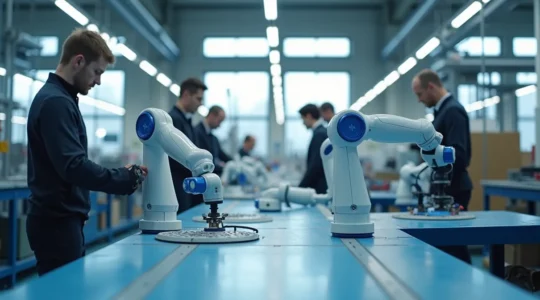
Cobots represent automation accessible to businesses that cannot justify traditional industrial robotics. Their key differentiator: operation alongside humans without safety fencing, enabled by force-limiting sensors and compliant designs.
Modern cobots can be programmed without coding expertise, learning new tasks through physical guidance in under an hour. This flexibility suits operations with variable products and short runs where traditional robot programming costs would be prohibitive.
However, ‘collaborative’ does not mean ‘risk-free’. Risk assessments remain mandatory, and certain applications—high-speed movements or sharp tooling—may still require physical guarding despite the collaborative designation.
These technological advances collectively represent opportunities to improve efficiency, safety, and competitiveness across UK industry. The key lies not in adopting technology for its own sake, but in matching specific solutions to genuine operational challenges—and implementing with sufficient attention to the human, environmental, and integration factors that determine success.
Cobots for SMEs: Automating Repetitive Tasks Without Safety Fencing
The real cost of repetitive tasks isn’t the upfront investment in automation; it’s the hidden price of unreliable, inconsistent temporary labour. Collaborative robots (cobots) often deliver a full return on investment in under a year, outperforming the ongoing expense of…
Read more
AR and VR in Industry: Training New Staff 40% Faster Without Risking Machinery
Traditional training is obsolete; AR/VR isn’t just technology, it’s a methodology that compresses experience to build skilled operators faster and safer. Virtual Reality (VR) cuts onboarding time by up to 50% by creating risk-free, repeatable practice environments. Augmented Reality (AR)…
Read more
Industrial AI Scheduling: Stop Guessing, Start Optimising Production Runs
AI scheduling slashes changeover times by treating your production floor as a solvable math problem, not a series of endless emergencies. The daily scheduling chaos you face is a “combinatorial explosion”—a problem mathematically impossible for the human brain to solve…
Read more
Predictive Maintenance ROI: Calculating the Value of Vibration Sensors for UK SMEs
The constant cycle of unplanned downtime isn’t a cost of doing business; it’s a failure of strategy. The true ROI of predictive maintenance comes from shifting your budget from expensive, emergency repairs to small, controlled interventions that prevent failure entirely….
Read more
Automated Storage Solutions: Solving the UK Warehouse Labour Shortage Crisis
The UK warehouse labour shortage isn’t a recruitment problem; it’s an operational systems problem that automation solves with a surprisingly fast and financially sound ROI. An Automated Storage and Retrieval System (AS/RS) can pay for itself in under three years,…
Read more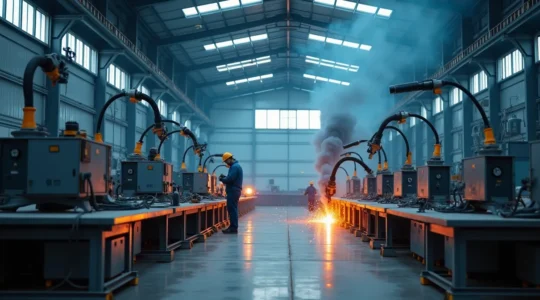
Extracting Welding Fumes: Why Standard Ventilation Fails LEV Testing in 2024?
The HSE’s reclassification of mild steel fumes as a Group 1 carcinogen means your existing ventilation is likely non-compliant and headed for a failed LEV test. Effective fume capture depends on precise positioning and airflow velocity, not just having an…
Read more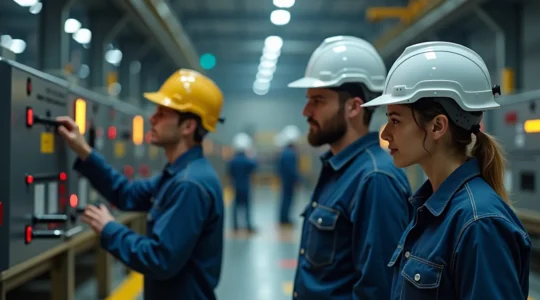
Connected Workers: A Data-First Approach to Slashing Injuries in Heavy Industry
The true power of Smart PPE isn’t in alerting you to an incident—it’s in creating a data ecosystem that prevents it from ever happening. Proactive safety zones and automated vehicle controls can eliminate entire classes of collisions before human error…
Read more
How innovative home technology simplifies everyday routines ?
Sarah rang me three months ago. Frantic. She was juggling conference calls from her home office in Manchester while the laundry pile had taken over the spare room and dinner defrosted in a pool of water on the worktop. Again….
Read more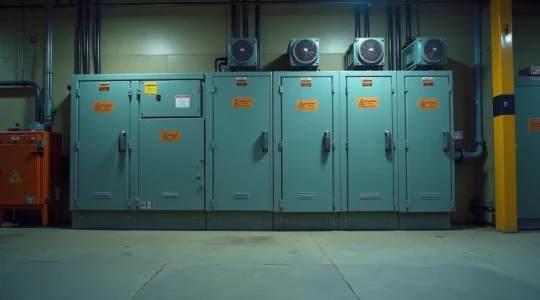
Operating in Extremes: A UK Foundry Guide to Electronics Survival
High heat isn’t the real killer of your foundry’s electronics; it’s the hidden physics of thermal derating and condensation that spec sheets ignore. Standard components can lose up to 20% capacity above 40°C internal temperatures, causing phantom faults even when…
Read more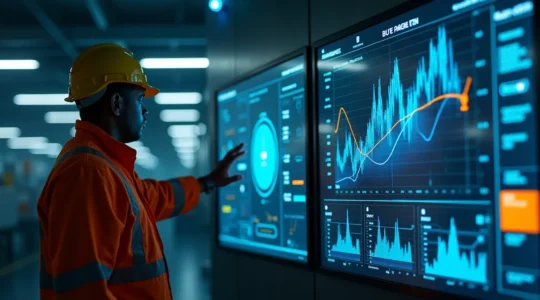
Reducing Operator Error by 40%: The Hidden Impact of UX on Industrial HMI
The persistent issue of “human error” in industrial settings is not a personnel problem; it’s a design problem that carries significant financial and safety liabilities. Confusing Human-Machine Interfaces (HMIs) are a direct cause of mistakes, as poor design forces operators…
Read more